Even After Major Hurricane Damage Trees Keep Growing
A new study co-authored by Arts and Sciences faculty offers new insights into how individual trees – and consequently forests – regenerate after devastating hurricanes.
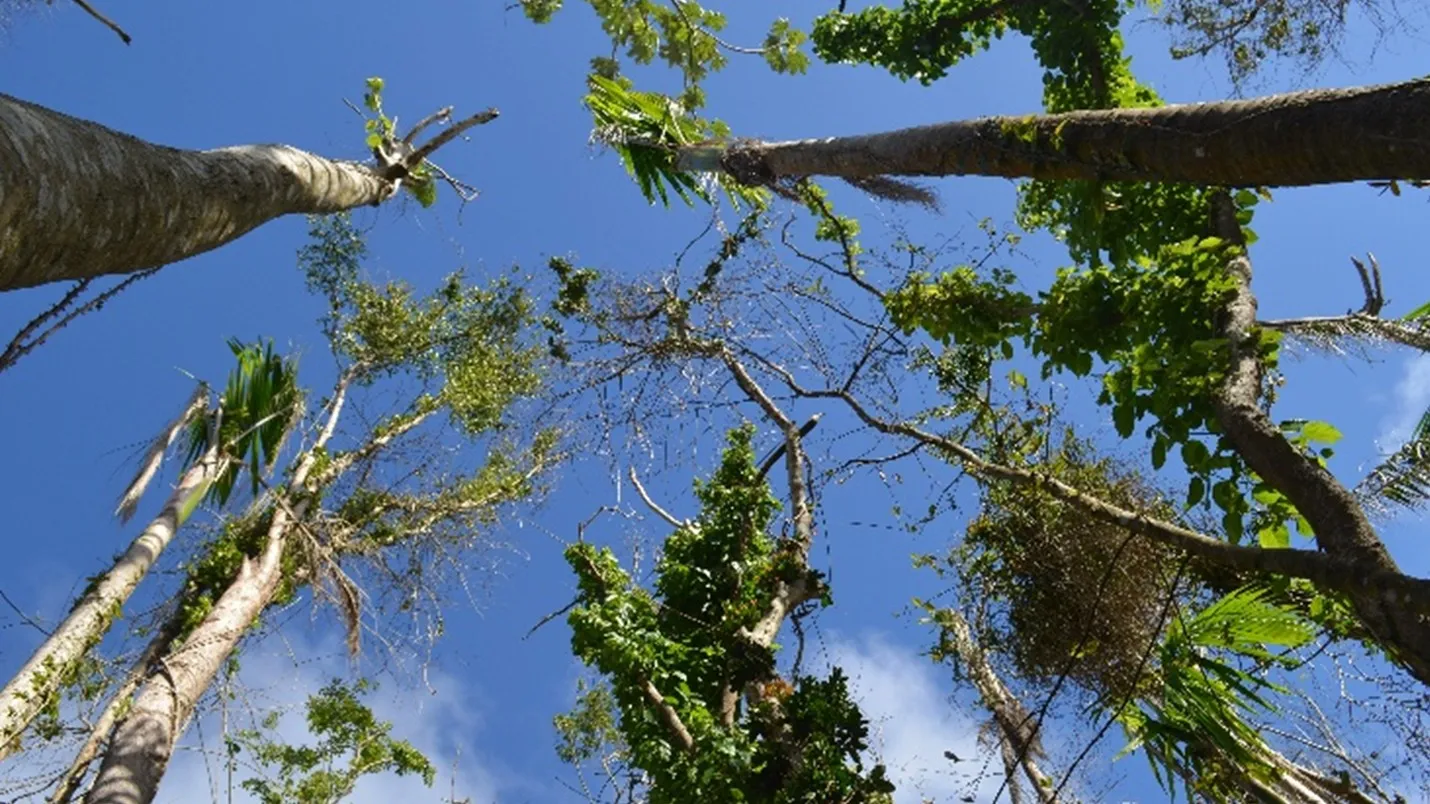
In September 2017, Hurricane María struck the Caribbean, causing extensive property damage, loss of life, and destruction of tropical forests. The impact was most severe in Puerto Rico, which suffered nearly 3,000 deaths and an estimated $90 billion in monetary losses. Even today, the long-term effects of the storm – the most powerful to make landfall in Puerto Rico since 1928 – are still unfolding.
With severe storms expected to intensify with climate change, and hurricane season just around the corner, a new study published this week in the Proceedings of the National Academy of Sciences (PNAS) offers important new insights into how trees recover from hurricane damage and the factors that contribute to their growth and resilience.
Co-authored by A&S faculty members María Uriarte and Tian Zheng, along with scholars from NASA and several other universities, the study analyzed airborne LiDAR and field measurements for more than 1,000 trees in the mountains of northeastern Puerto Rico before and after Hurricane María. The goal was to better understand how canopy damage to trees influence their growth following a hurricane, and the implications for the broader forest ecosystem. In particular, the study assessed how damage to the crown of a tree (its branches and leaves) affected the growth of its stem (the trunk) after the storm.
Researchers faced a challenge, however, in disentangling individual damage effects from those of broader forest damage. Hurricanes have counteracting effects on growth. At the individual level, losing biomass reduces a tree’s capacity to take up carbon, but it also lowers maintenance costs. At the stand level, damage reduces competition for light, a key driver of growth, but it also creates a hotter, drier environment that increases stress and water loss. Individual tree growth reflects the net outcome of these interacting processes.
To address this challenge, the researchers used LiDAR to create high-resolution, three-dimensional renderings of the forest canopy from pulses of laser light. When mapped against on-the-ground measurements taken before and after the hurricane, they were able to develop a more precise and quantifiable measurement of crown damage for individual trees and the forest canopy, something that had not been done before.
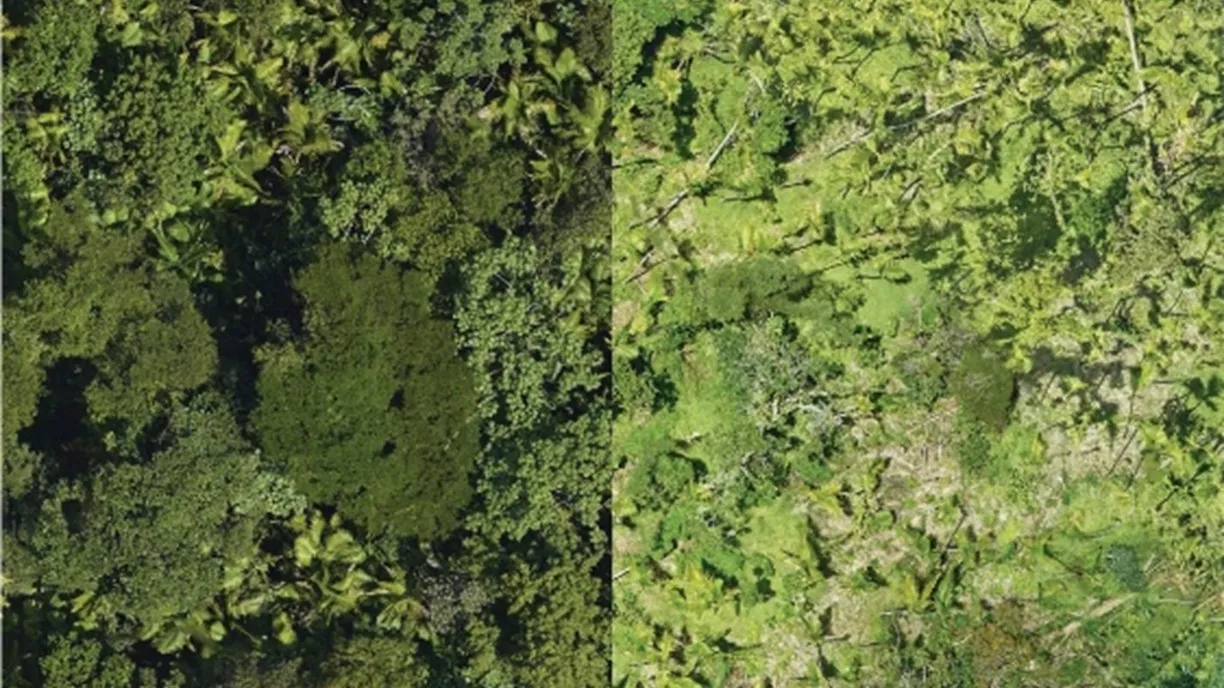
What they found was surprising. Individual tree growth prior to a hurricane was the prevalent driver of growth following the hurricane, while the extent of canopy damage, either to a given individual tree or its neighbors (those within five meters) had minimal impacts. In other words, a tree’s condition or vigor before the hurricane mattered more than the damage it experienced during the storm.
The new findings suggest that, even after a severe disturbance from a hurricane, growth and carbon uptake in surviving trees remain resilient. This challenges a common assumption in models that hurricane damage suppresses tree growth. The findings also highlight the importance of considering individual trees and local context when modeling the large-scale effects of a hurricane on forests.
Maria Uriarte, the senior author of the study, and Professor and Chair of the Department of Ecology, Evolution, and Environmental Biology (E3B), shared some additional insights in the brief interview below.
What surprised you most about the study’s findings and why?
The fact that a tree can lose between 50% and 80% of its canopy without any measurable impact on growth was very surprising. Those that were thriving before the storm seem able to keep growing afterward, even with major damage. Their prior health gives them a kind of buffer, allowing them to withstand the immediate effects of the hurricane.
The growth dynamics for an individual tree, its immediate neighbors, and the larger forest are complex. How should we think about that relationship in the context of the study?
Hurricanes operate across multiple scales, and their effects are not always intuitive. At the level of an individual tree, damage reduces its ability to take up carbon, but it can also lower the energy needed to maintain that tissue. At the same time, damage across the forest alters the environment around surviving trees, reducing competition for light, but also creating a hotter, drier, and more stressful microclimate.
By comparing the impacts of Hurricane María with those from earlier storms, Hurricanes Hugo (1989) and Georges (1998), we have learned that more severe hurricanes lead to more extensive damage at the forest, or stand, scale. One key insight from our work is that these stand-level changes can have delayed consequences. Even though many trees continue to grow well after a hurricane, widespread canopy damage increases heat stress and water loss, which can elevate the risk of mortality years later. In a separate study, we found that damage to neighboring trees can increase this lagged mortality risk, especially for large trees that already have high energy and water demands. As climate change brings more intense storms, these delayed effects are likely to become more pronounced, leading to higher levels of tree mortality over time.
New technology – particularly LiDAR – allowed you to make new kinds of measurements and comparisons. Can you speak more about that aspect of the study? Are there other technologies you expect will open-up new avenues for exploration?
LiDAR allowed us to measure canopy damage with much greater precision than traditional field methods. Assessing damage from the ground is challenging because we rarely know what a tree’s crown looked like before the storm, and much of the damage occurs high in the canopy, out of view. As a result, researchers often have to estimate damage based on what remains, such as broken branches or partial crowns, which can introduce substantial uncertainty. By contrast, LiDAR provides a detailed, three-dimensional view of the forest both before and after a disturbance, allowing us to quantify how much of the canopy was actually lost.
More broadly, advances in sensor technology are transforming the field. Low-cost sensors now allow us to measure tree physiology and growth at fine temporal scales across many individuals and species. When combined with remote sensing tools like LiDAR, these approaches make it possible to link detailed measurements of individual trees to patterns across entire landscapes, opening new possibilities for understanding forest dynamics and improving how we manage ecosystems under increasing environmental stress.
I also want to speak about a more seemingly mundane issue, the need for long-term studies. We had detailed measurements of tree growth from before the hurricane, which made it possible to directly assess how trees responded after the storm. This kind of pre-disturbance information is rarely available but is essential for understanding the true impacts of extreme events. Our work takes place within the Luquillo Long-Term Ecological Research (LTER) program, funded by the National Science Foundation. Long-term research sites like this allow us to track ecosystems through time, capturing both the immediate and delayed effects of disturbances. By being in the same place before and after major events, we can begin to understand how forests respond to the multiple stressors they experience.
What lessons should we take from the study to inform hurricane planning or ways to improve forest resiliency, particularly as storms increase in intensity and the effects of climate change become more severe?
This is a somewhat optimistic story, but not necessarily a reassuring one. Tree growth and carbon uptake appear resilient in the short term, but we need to consider longer timescales and repeated disturbances. In the Caribbean, climate change is expected to bring more intense hurricanes, along with hotter and drier conditions. Over time, hurricanes tend to favor species that are particularly vulnerable to drought and heat. So while forests may recover after individual storms, their composition may shift in ways that make them more vulnerable to these other climate stressors. Understanding these interactions between multiple climate impacts is now a central focus of our research.